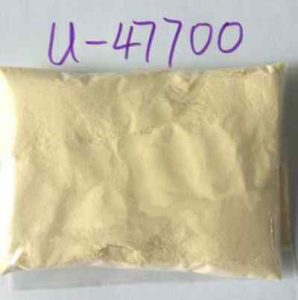
The intriguing substance, commonly referred to as U-47700, initially lacked a public designation beyond its research identifier. Its true chemical name is N-(3-hydroxyphenyl)-N-[1-(4-methoxyphenyl)propan-2-yl]acetamide, a somewhat daunting designation reflecting its manufactured origin. Developed in the early 2000s by Dr. Unna at the University of Bonn in Germany, U-47700 was initially synthesized as a potential investigational analgesic, acting as a potent agonist for the kappa opioid receptor. Its development stemmed from efforts to find alternative pain relievers – a quest that ultimately led to its current notoriety far removed from its planned therapeutic use.
Understanding the Vernacular Names for U-47700
U-47700, a synthetic opioid , is often referred to by various slang names, making identification difficult. These informal labels evolve frequently, complicating attempts to monitor its presence. Users and suppliers might use copyright like “Pink,” referring to its original color; “Blue Joker,” a mix possibly linked to a particular supply; or simply “U,” a abbreviated version of the substance's name. Such crucial to remember that these aliases are unstable and can vary geographically and over durations.
- Red
- Joker
- U-Four
The Do U47700 Tablets Seem Like A Photo Directory
Understanding this appearance of U-47700 tablets can be challenging, as they are often manufactured in varying forms by various illicit laboratories . Commonly, these drugs are found as tiny rectangular pressed blocks, but deviations are frequent . You might see them in colors ranging from off-white to a light gray. Sometimes , they can even be purple , although these colors are less common . A size is typically approximately 5-8 mm in length and about 2-4 millimeters in thickness. Note that the is just a common guide and the precise form can vary significantly.
The Dark Web & U-47700: Examining Online Sales
The shadowy corner of the dark web has become a notorious hub for the unlawful sale of dangerous substances, most currently drawing scrutiny due to the presence of U-47700, a potent opioid. Investigations reveal a alarmingly accessible channel where individuals can buy this and other synthetic compounds, often with minimal oversight or regulation. This situation raises serious fears about public health and the simplicity with which harmful materials can be spread globally, prompting authorities to intensify their efforts to dismantle these online ventures.
U-47700: Assessing the Hazards and Purchasing Practice
U-47700, a synthetic analgesic , presents severe dangers to individuals who contemplate to acquire it. Its effect is thought to be many times that of morphine , u-47700 pills looks like making just a small amount possibly fatal . Scarcity of thorough research on its long-term impacts and unknown interactions with other medications contribute to its unavoidable hazard . Therefore , seeking to get U-47700 is strongly discouraged and poses a serious hazard to life.
Past the Label : Investigating the Real Identity of U-47700
U-47700, initially categorized as a experimental chemical compound, soon evolved into something far more complex . Dismissing the cursory label obscures the profound implications of its actions and potential consequences . Instead of concentrating solely on its chemical structure, a deeper examination reveals a remarkable ability to interact with the opioid receptor system, producing effects that are considerably more intense than many traditional analgesics. Understanding its true nature requires transitioning beyond the superficial grouping and delving into the scientific mechanisms that drive its unique activity . This requires a holistic approach, evaluating not just its chemical properties, but also its impact on organic systems and its place within the larger framework of opioid pharmacology.
- Further investigation is required to completely comprehend its entire range .
- Responsible considerations surrounding its improper use are of paramount importance .
- Public knowledge regarding its dangers is crucial for mitigation of harmful effects.